American Spinning Works • One Textile Co. • Yuma Spinning Hub
OperationChromite
The return landing. America came to Korea to save the war; a Korean-American lands in Arizona to help save the industry. The flagship campaign and facility name for the American ring-spinning revival.
Domestic supply loop · grown in the Southwest → spun in Yuma → milled & sewn on American soil
I. The Founder's Frame
In September 1950, an amphibious landing at Inchon turned a war everyone thought was lost. The tides were called impossible. The seawalls were called suicidal. Nearly every planner advised against it. It went ahead anyway — and it saved Korea.
I am Korean-American. America came across an ocean and landed at Inchon to save Korea. Now I make the return landing — in Arizona, to help save America. Same audacity, reversed direction. That symmetry isn't a slogan I reached for; it's the actual shape of my life.
1950
Inchon, Korea
America lands to save the war
↺
Today
Yuma, Arizona
A Korean-American lands to save the industry
They crossed an ocean to land at Inchon and turn a war no one thought could be won. Operation Chromite is the return landing — the beachhead in Arizona where American spinning comes back. The debt America paid my homeland, I pay back on American soil.
That is the difference between a clever codename and a true one. The Inchon connection isn't a marketing device bolted onto a cotton venture — it is the founder's lineage made into a mission, and a debt come full circle. It is mine to tell.
Daniel — leave a line or two of personal family detail here if you're comfortable (where your family is from, a relative's connection to the war or to coming to America). One concrete sentence will make this section unforgettable. I've written it so it stands strong either way.
YOUR PHOTO HERE
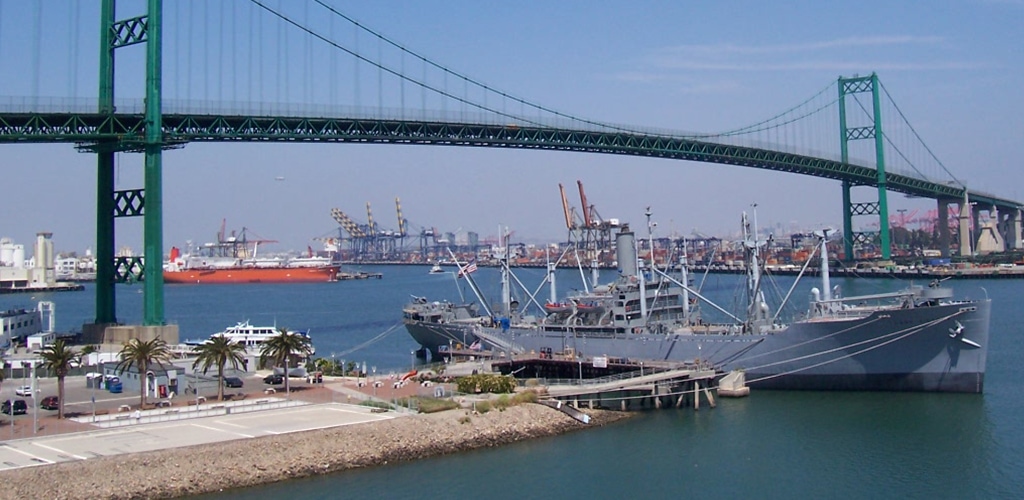
Stand on her deck in San Pedro and shoot it yourself. Save as assets/images/lane-victory.jpg — no licensing, the image is yours.
The Ship You Can Stand On
SS Lane VictoryA Victory cargo ship — logistics made physical — that you can photograph yourself.
Inchon was won by logistics, and the whole American Spinning Works argument is about supply lines and the value that crosses oceans. The SS Lane Victory is that argument with a hull. In December 1950 — months after the landing — she ran the Hungnam evacuation under fire and carried 7,010 Korean civilians south to safety. A baby was born aboard; 7,011 walked off. America saving Korea, made literal.
Today she rests as a National Historic Landmark in San Pedro, California — she crossed the Pacific and now sits on American soil, the bridge between the two shores. A ship nearly scrapped, then revived. Raise a camera on her deck and you hold the entire thesis in one frame.
★ Victory-class supply ship★ Hungnam, Dec 1950 · 7,011 saved★ National Historic Landmark · San Pedro, CA★ Your own photo — zero licensing
II. Where the Name Sits
Operation Chromite does not replace American Spinning Works or compete with your marks. It names the thing being built — the capital project that had no name with weight until now.
American Spinning WorksPublic advocacy & policy umbrella — americanspinworks.com
Operation Chromite★ the buildout
Campaign to fund & stand up the Yuma hub. The "Chromite Works" once built.
FIRSTSPUN
Fiber identity / certification mark for domestic ring-spun yarn.
NORTH LOOM
Consumer-facing blank apparel retail brand.
Two uses, kept distinct: Operation Chromite is the initiative — the war-room narrative, the grant push, the deck cover. The Chromite Works is the mill itself once it stands. Industrial, hard-edged, American — the way it reads on a building is the point.
III. The Narrative Arc
The metaphor holds because one beat is not metaphor at all — the supply-line cut is literally what your benchmark data proves.
Inchon, 1950
Operation Chromite, today
Experts call the conditions impossible
The consensus says US spinning is dead and can't compete on cost
The bold landing is made against that consensus
A domestic Yuma hub is built where others won't invest
The enemy's supply line is severed
The ~$1.76/lb in foreign value-add — and 2,900+ miles — stops leaving the country
A losing position flips into a full reversal
Pima cotton spun, milled, and sewn on American soil; $120M+ value retained, 400+ jobs per mill
IV. How to Tell It — Guardrails
DO tell it as the principle of the landing: surprise, decisive logistics, betting against the room.
DO lead with the founder's heritage — it's what makes the name earned rather than appropriated.
DO anchor the "supply-line cut" to real numbers; that's the beat that's true, not just rhetorical.
DON'T stage a war reenactment — no troop iconography, no body count. The trans-Pacific arc above is the exception: it traces the founder's journey, not the battle.
DON'T front MacArthur — keep his face and quotes off it. It's "the operation," never "the general." Naming after the op, not the man, keeps it from getting polarizing or dated.
DON'T push Chromite onto a hangtag or product — "chromite" means chromium ore and has zero textile association. Industrial strength is an asset in the war room, a question mark on a label.
V. The Recommendation
Adopt Operation Chromite as the flagship name for the Yuma buildout — the investor/grant campaign and the eventual mill — sitting beneath American Spinning Works, alongside (not replacing) FIRSTSPUN and NORTH LOOM. It adds war-room urgency and a turning-point spine to the reshoring pitch, carries the founder's story at its core, and spends none of the brand equity already built.
One clearance note: kept as an internal initiative and facility name — not a source identifier on goods — "Chromite" likely needs no trademark registration at all. That removes the one real blocker. Confirm with a quick TESS check only if it ever moves onto a product.